
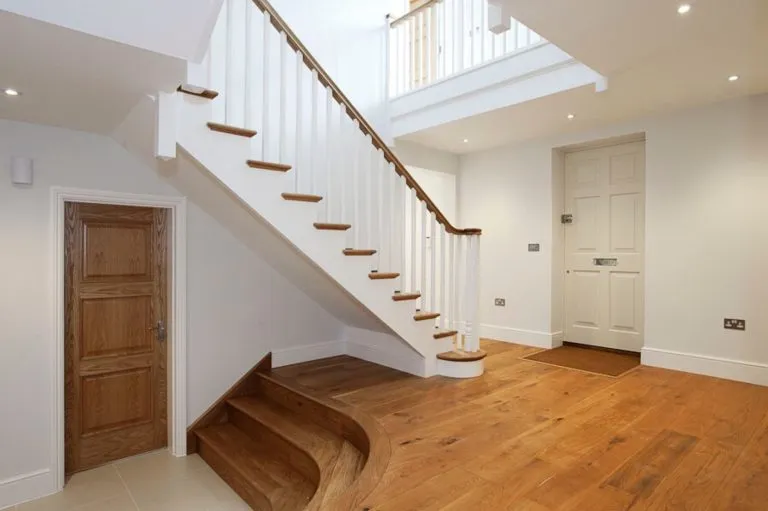
Here’s something that surprises people. In an industry that keeps pushing glass, metal, and floating everything, timber stairs remain the most popular choice in UK homes by some distance. Not because people are playing it safe, but because wood genuinely delivers in ways other materials don’t.
The key is knowing which timber, which finish, and which style actually suits your home. Timber stairs done well are hard to beat. Done badly, they look cheap and wear out faster than they should.
Wood Has Changed More Than People Realise
The heavy, dark-stained staircases of the eighties and nineties put a lot of people off timber for years. Fair enough. But today’s timber stairs feel completely different. They’re lighter, more refined, and more carefully considered. The chunky profiles are gone. Thinner treads, often 40 to 50mm rather than the traditional 60 to 70mm, create a much more elegant appearance.
Modern engineering made that possible. The results look genuinely contemporary.
Oak Is Still Dominant, But the Finish Has Shifted
Oak continues to dominate, but 2026 is seeing a clear shift towards warmer, richer finishes rather than stark pale tones, reflecting a wider interior trend towards warmth, texture, and natural materials.
The other big change is how the wood is finished. Oil finishes that penetrate the wood rather than sit on the surface allow the grain to show naturally. Matte finishes avoid the glossy, plastic-like appearance that dates older stairs. The wood looks and feels like wood. That sounds obvious, but it makes an enormous difference.
What About Other Timbers?
Oak gets most of the attention, but it’s not the only option. Ash, maple, and birch are gaining ground for their pale, Scandinavian-inspired tones that make spaces feel larger and brighter, which is especially useful in compact urban homes. Walnut sits at the other end, richer and darker, and works brilliantly in period properties or rooms with warm colours.
Softwood is cheaper and can work fine in lower-traffic areas. Just don’t expect it to hold up the same way on a busy family staircase. You’ll be sanding and refinishing it within a few years.
Mixing Timber With Other Materials
Pure wood staircases are still popular, but the direction in 2026 is definitely mixed materials. Painted elements are being paired with natural timber treads, allowing texture and material to do as much work as colour. Staircases are increasingly designed as part of a wider scheme, with painted elements linking into hallway walls and floors to create a cohesive feel.
Glass used selectively, rather than as the only feature, creates brightness and openness while keeping things practical and family-friendly. A timber tread with glass panels and a slim black metal handrail is one of the most requested combinations right now. It works because each material does a different job.
What Timber Actually Costs
A straight flight in oak sits roughly between £750 and £1,950 for materials. Spirals or glass push the budget considerably higher, up to £2,500 and well beyond for complex or bespoke work. Labour adds on top of that, typically £500 to £2,000 depending on complexity and your location. London and the South-East tend to sit at the upper end.
The variables are the design, the number of turns, and how much bespoke work is involved. A standard straight run costs far less than a curved or floating design.
Sustainability Is Now Part of the Conversation
It wasn’t something many homeowners asked about five years ago. Now, responsibly sourced timbers are increasingly expected rather than optional. UK-grown certified timber supports sustainable forestry while ensuring consistency and strength.
It’s worth asking your supplier where the wood actually comes from. The ones who know will tell you straight away.
Getting the Spec Right Before You Buy
The most common mistake with timber stairs isn’t the wood itself. It’s the spec. Tread depth, riser height, and the pitch of the staircase all affect how comfortable it is to use every single day. UK building regulations give you the parameters, but within those there’s still room to get it subtly wrong.
Talk to a specialist, not a general builder. Someone who does this regularly will flag things a generalist won’t think to mention. Ask about how the timber is joined, how it’s finished, and what maintenance it’ll need over time.
A well-built timber staircase lasts decades with basic care. That’s the whole point.
